Remodel Or Move? Making The Call In Alamo Heights
May 28, 2026
May 28, 2026
If you love your address but not the way your home lives, you are not alone. In Alamo Heights, where many owners stay put and home values are high, the remodel-or-move decision can feel less like a simple preference and more like a major financial strategy. The good news is that you can make this call with more clarity by weighing cost, timing, permitting, and resale impact before you commit. Let’s dive in.
Alamo Heights is a market where staying put is common. U.S. Census QuickFacts reports that 74.1% of housing units are owner-occupied, and 82.9% of residents lived in the same house one year ago. That tells you something important: many homeowners here are not making quick, casual housing decisions.
Values are also elevated, which raises the stakes on both sides of the equation. Census data puts the median value of owner-occupied homes at $779,400. Redfin’s March 2026 snapshot showed a $531,000 median sale price in Alamo Heights compared with $260,000 citywide in San Antonio, which points to a sizable local price premium.
That premium can make remodeling more attractive if you already own in the area. At the same time, it can make moving more expensive if your next home comes with a higher purchase price, closing costs, moving expenses, and a new mortgage rate. Freddie Mac reported the average 30-year fixed-rate mortgage at 6.51% on May 21, 2026, so financing costs still matter.
Before you compare contractors and listing appointments, it helps to understand the current market backdrop. Realtor.com’s May 2026 snapshot showed 64 homes for sale in Alamo Heights, a median listing price of $725,000, and 41 median days on market, and labeled the area a buyer’s market.
Redfin’s March 2026 sold-data snapshot looked different, with a $531,000 median sale price, 153 median days on market, and a somewhat competitive label. These are not direct apples-to-apples numbers because one reflects listing-side activity and the other sold-side results from a different time window. Still, together they suggest a market where pricing, presentation, and condition matter.
That matters for your decision because a move is not just about finding the next house. It is also about what your current home will realistically sell for, how long that sale may take, and how much prep work buyers may expect before making an offer.
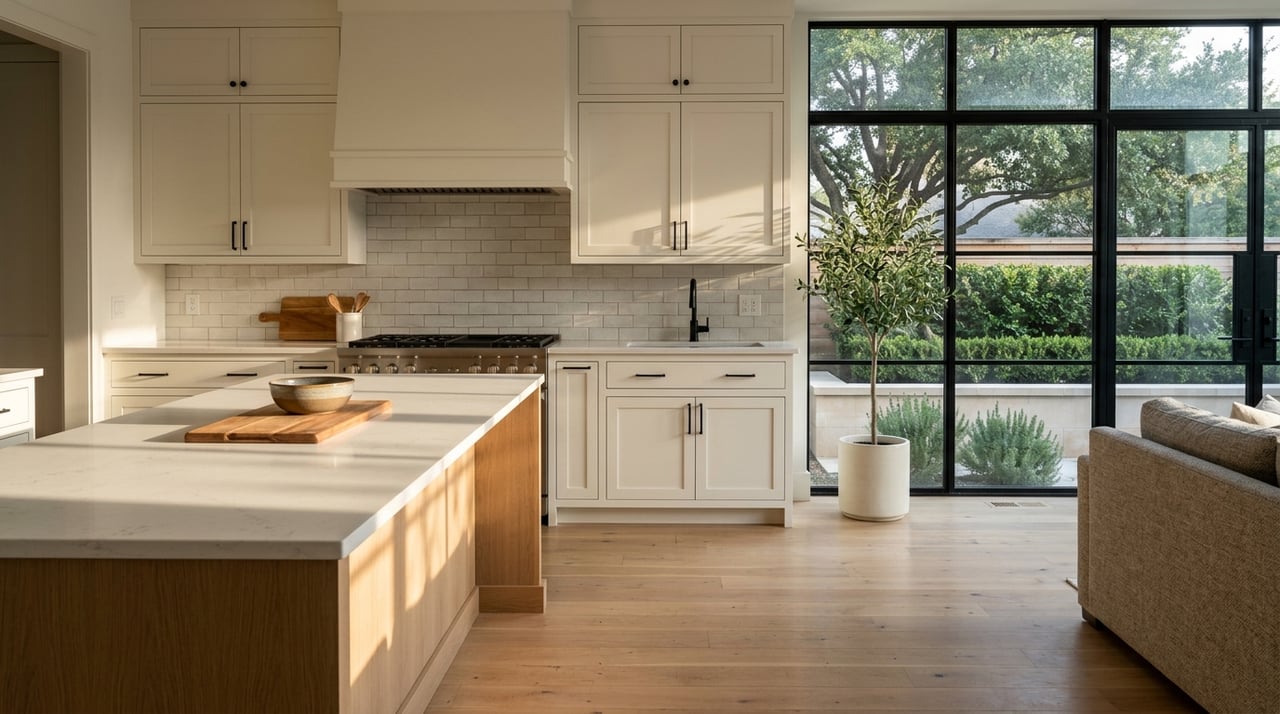
Remodeling usually makes the most sense when you already like your location and the home mostly works for your life. If the issues are targeted, such as an outdated kitchen, a tired bathroom, poor storage, or a lackluster entry, you may be able to improve your day-to-day experience without taking on the full cost and disruption of a move.
This can be especially true in Alamo Heights, where owners often have a strong reason to stay in place. If your lot, block, commute, or connection to the area still fits, a strategic renovation may solve the right problem without forcing you back into a high-price market.
There is also the personal side of the equation. According to the 2025 Remodeling Impact Report, homeowners often remodel for both resale and enjoyment. The report found a typical Joy Score of 8.2, and after remodeling, 64% of owners said they had a greater desire to be in the home.
Not every renovation performs the same way. Current NAR research suggests that smaller, visible improvements often recover more of their cost than major, highly customized overhauls.
Some of the strongest estimated cost recovery figures in the report included:
By comparison, larger interior projects were more moderate in estimated cost recovery:
That does not mean you should never do a kitchen or bath project. It means you should go in with realistic expectations. If your main goal is resale efficiency, visible updates and broad-appeal improvements may offer a better return than a full-scale luxury remodel.
If selling soon is part of your thinking, condition deserves real attention. The 2025 Remodeling Impact Report found that 46% of buyers are less willing to compromise on a home’s condition. That helps explain why even modest updates can affect buyer response.
The same report noted that REALTORS® most often recommended painting the entire home, painting one room, and new roofing before selling. They also reported increased buyer demand for kitchen upgrades, new roofing, and bathroom renovations over the prior two years.
For many Alamo Heights homeowners, this points to a middle path. You may not need a whole-house reinvention to improve marketability. A focused plan around cosmetics, deferred maintenance, and a few high-impact updates may be enough.
Sometimes the house is not just dated. It is fundamentally the wrong fit. If you need a very different layout, significantly more or less space, or a function your current property cannot reasonably support, moving may be the cleaner long-term solution.
A move can also make more sense when your renovation would push into major structural changes, extensive site work, or a long permitting timeline. In those cases, the budget can grow quickly, and the stress can start to outweigh the benefit of staying.
This is where emotion and math have to meet. If your home needs large-scale changes to become what you want, compare that total project cost against what it would take to sell, buy, and relocate. In a market with elevated replacement costs and higher mortgage rates, the right answer is rarely obvious at first glance.
In Alamo Heights, the local process is an important part of this decision. The city accepts building, licensing, certificates of occupancy, and other building-related applications through My Government Online. It also provides separate residential permit forms for SF-A and SF-B zoning districts.
That matters because many homeowners think of a project as a simple remodel when the city may see it differently. Under the city’s zoning code, the landscaping section applies when a building permit application is made, but remodeling is exempt if the roof and the front, side, and rear exterior walls remain in the same location.
In plain terms, scope matters. If your project changes the home’s exterior footprint, site layout, or building envelope, it may move beyond a cosmetic update and into a more involved review process. That can affect timing, cost, and whether remodeling still feels like the simpler option.
The smartest way to make this choice is to compare two real numbers, not two guesses. On the remodel side, get a contractor-backed budget that reflects the actual scope of work, timeline, and any likely permit needs.
On the move side, focus on net proceeds, not just your hoped-for sale price. Fannie Mae advises sellers to factor in home-improvement costs, closing costs, moving expenses, and the amount of equity left after payoff. That gives you a more realistic picture of what you would actually have available for your next purchase.
A clean comparison often includes:
This approach is especially useful in Alamo Heights because the numbers can be large on both sides. A project that seems expensive may still cost less than replacing your home in the same area. On the other hand, a major remodel may not make sense if it still will not deliver the function you need.
If you are stuck, start with four simple questions.
If you still love where you live, remodeling gets a stronger case. In a place where many owners remain in their homes year over year, staying can carry real lifestyle value that is hard to duplicate.
Cosmetic issues usually lean toward remodeling. Structural layout problems, major additions, or footprint changes may lean toward moving, especially if local permitting becomes more involved.
Projects with visible impact often support both enjoyment and future resale. Front doors, windows, paint, roofing, and refreshed kitchens or baths are easier for buyers to notice than expensive behind-the-walls work.
Your next step should be financial clarity. Compare a real renovation budget to a professional estimate of likely sale proceeds and move costs, then weigh that against how much you value staying in place.
In the end, the right answer is not always remodel or move in the abstract. It is which option protects your finances, supports your lifestyle, and makes sense for your property in Alamo Heights.
If you want help weighing both sides with local pricing insight and a clear-eyed view of your numbers, Meghan Pelley can help you compare your likely net proceeds against the cost of staying and upgrading.
Stay up to date on the latest real estate trends.
Real Estate

Lifestyle
We asked moms of all kinds what they really want for Mother’s Day and the answers were refreshingly honest, practical, and surprisingly universal.

Lifestyle
AI can make life easier, faster, and more efficient but it can never replace human connection, judgment, expertise, or responsibility.
Meghan Pelley Realty Team are dedicated to helping you find your dream home and assisting with any selling needs you may have. Contact us today to start your home searching journey!